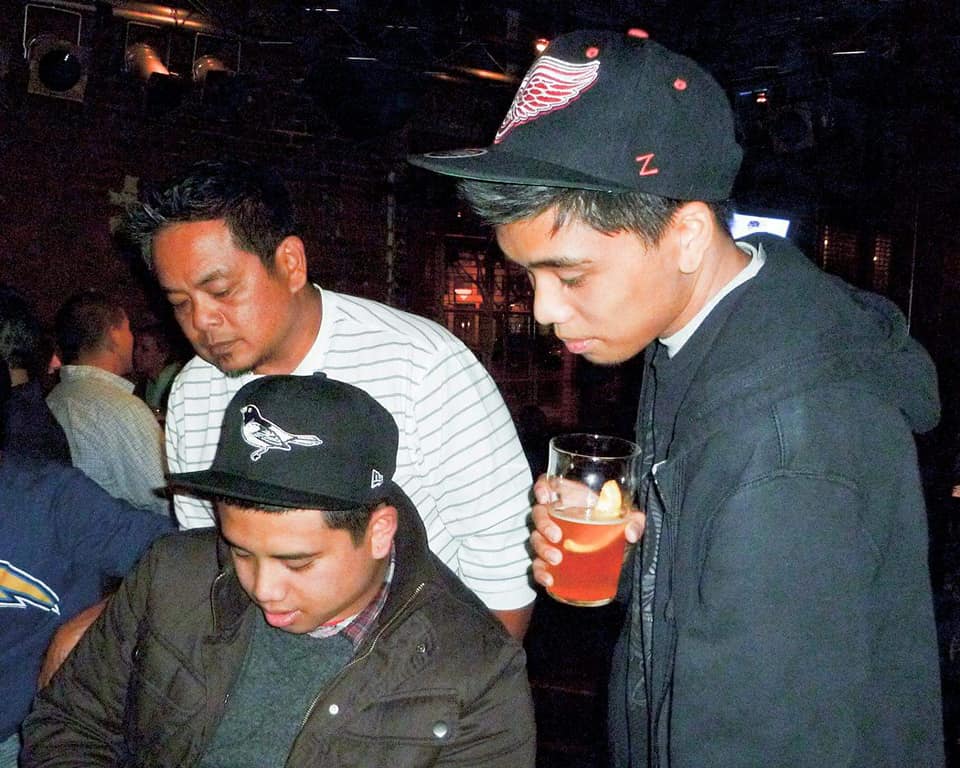
   I once completely broke down over a single candid photo of my dad, my brother, and me. In the photo, our three sets of eyes are focused on my phone outside of frame. Flash was used, so the restaurant that we were at is hardly visible, and our faces are washed in harsh, overexposed light. Under normal circumstances this picture would be deleted from my phone to free up some digital space, but my dad is dead. I’d already lost his presence; I felt it was my duty to keep whatever else remained of him around.

            In 2012, I received a phone call from my stepmom that I almost didn’t answer because I was in the middle of my third beer sitting in Pacers, a strip club in San Diego. The music was pulsating extra hard, and I figured I could step out to the smoking patio anyway to get away from it. Outside, I answered her call, and remember only hearing with a tone of urgency, “you need to come back to Arizona. Your dad is in the hospital, it’s not good.” When I hung up, the outside chatter disappeared and instead came a piercing high-pitched ringing, the kind you hear just after a nearby bomb goes off. Dazed, I walked back inside. The music was completely muffled by my current state of shock. I took a seat and stared toward the stage but at nothing in particular. The next morning, I hopped in my car and drove 4.5 hours straight to the hospital in Arizona. My stepmom explained to me that he had suffered a heart attack. He would die five days later.

            At his funeral, I stepped up to the church podium and tightly gripped the sides of the lectern as if I were bracing for a hurricane to tear through the room. After a handful of echoed sobs and coughs I heard the pastor behind me clear his throat in my direction. That was my cue that I’d been standing there for too long without saying anything. I gave my short speech, and cried for everyone to see, but that was that. Soon after, my world returned to its original state, and I felt guilty about it.

            Upon returning to work, I went about my day as usual. My superiors would approach me and ask if I was fine. I was. I shouldn’t have been, but I was completely unaffected, or so it seemed. They recommended I go see a counselor anyway. After two sessions with the counselor, I continued to show no signs of trauma or grief. I was honest, and that made me feel guilty, so I stopped going. Most people grapple with the loss of a loved one, but I grappled with the guilt of not grieving.

            For years I chalked up my quick resolve to my brain simply being wired differently. Though, there were signs that I had been clearly effected. On a trip to Seoul, a friend of mine accompanying me asked after a night of strolling down beautifully lit alleys and drowning ourselves in Korean culture if this was “the best day ever?” In true dark humor fashion, I jokingly responded to her by saying, “No, I haven’t a good day since the day before my dad died.” I laughed but quickly shrank when I realized that my statement was mostly true. I ruined the rest of my Korea trip. My unresolved trauma leaked everywhere in small amounts, unnoticeable to those that weren’t observing me with a microscope. I always had tendencies to be a complete asshole to my close friends, but there were many moments when I’d taken things overboard. We took these signs and reassigned them to false truths.

            “Sorry, COVID’s got me acting like I’ve never socialized before,” I’d say.

            “You need a girl and have some kids while you’re at it. That’s all it is,” they’d say.

            Now, in my late 30s, after years of excusing my behavior to aging, or pandemics, I’d come to realize that I was still living with unresolved grief, and my candid photo was the beginning of that enlightenment. I was looking for a specific old photo and the best place I knew to look was in the trenches of my Facebook photos page. It was a nice stroll through memory lane. When I saw the candid photo, I stopped and looked at it for a long time. It struck me that I hadn’t seen my dad’s face in years, and that fact alone left me completely stunned. The true beauty of the photo was how alive it felt. Family photos often feel disingenuous. They’re very coordinated. We pose, we slap a fake smile on our faces, we make sure we’re centered in frame, and we make sure the lighting is just right. They’re very sweet to have, but they carry a sense of artificialness. The fact that my candid photo of my dad was nothing like that and completely unremarkable was exactly why it felt like true magic—a moment in time captured and trapped forever in a photo. I felt like if I reached out, I could really be there with him. I longed to be there at that moment with him again and wished I could create more memories with him. I was torn that I couldn’t.

            That night I dreamt of him. He pulled into the driveway of our house, and my brothers and sister came out to greet him, hug him, and help him bring in the groceries he had just bought. The dogs came rushing out the door and my youngest brother ran out and chased them around to bring them in. My dad put his arm around me, and we talked about something I don’t remember. Someone inside the house was talking loudly, my brother was laughing at something my sister said, a phone was ringing, and the dogs were barking. It was a normal chaotic evening in our household. When I woke up, I smiled, forgetting that he was no longer around. When I finally came to my senses and I understood that my dream was the closest I’d ever get to seeing him again I cried harder than I cried when he passed away.

Subconsciously, I didn’t allow myself to grieve because I felt like I didn’t have enough spectacular moments with him. I didn’t have enough time to show him the accomplishments I would achieve, or the great things I could create to impress him. So, I refused to let go because it would signal a finality that I didn’t want to acknowledge. My dream, and the candid photo, corrected my perspective. Our time together was incredible because of the mundane moments, and we had plenty of them.

 NEW REVELRY
Leave a comment